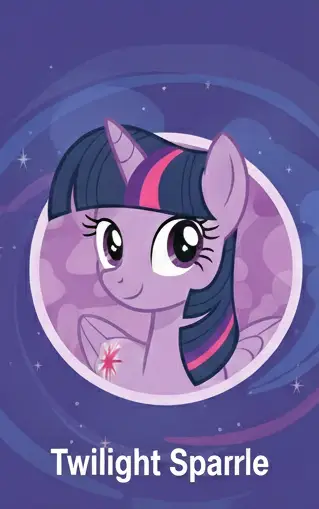
Twilight Sparkle
Magic, strategy, and a love of knowledge.
Match your traits to the Mane Six in this My Little Pony test and reveal the element of harmony that guides your choices.
Six core personalities, six elements, one shared story.
Magic, strategy, and a love of knowledge.
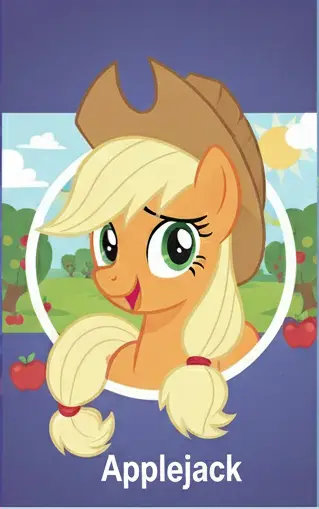
Honesty, grit, and steady responsibility.
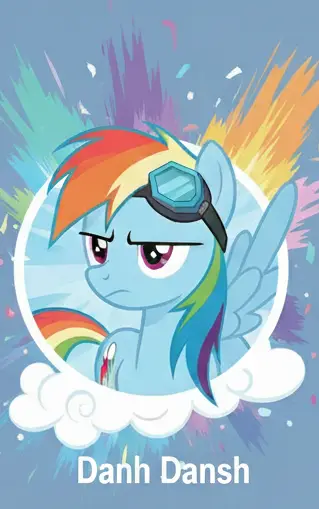
Loyalty, speed, and fearless ambition.
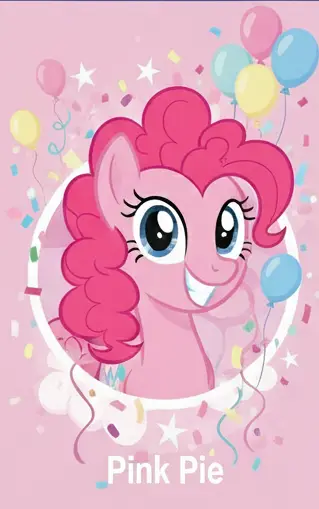
Laughter, warmth, and unstoppable optimism.
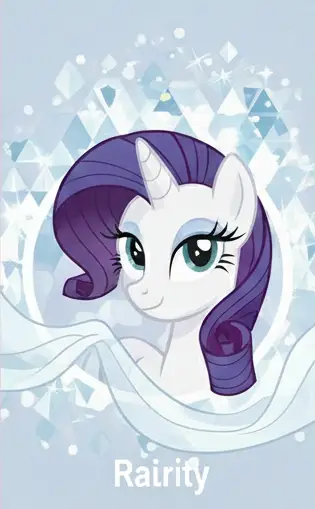
Generosity, taste, and creative sparkle.
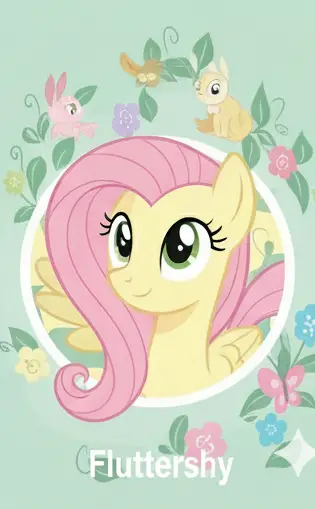
Kindness, empathy, and gentle strength.
Each answer maps to an element of harmony for clear personality alignment.
Prompts balance intuition, logic, and relationship energy for deeper matches.
A compact test that still captures nuance.
Get a visual result page you can share with friends.
Understand your drive, strengths, and soft spots.
Finish in minutes with a cinematic summary.
Tie your answers to the element that best fits your My Little Pony test result.
Every My Little Pony test outcome maps to one of the six core archetypes.
No. This is a fan-made personality match inspired by the Mane Six archetypes.
Each answer adds weighted points to a character profile, then a tiebreaker set refines the match.
Yes. Results are calculated on the spot and this My Little Pony test can be retaken anytime.
It is 18 questions and usually takes under 6 minutes.
The My Little Pony test focuses on the Mane Six: Twilight Sparkle, Applejack, Rainbow Dash, Pinkie Pie, Rarity, and Fluttershy.
Yes. The My Little Pony test is free and gives instant results.
A longer look at why the My Little Pony test resonates with fans who want more than a quick quiz.
This My Little Pony test is built around the Mane Six and the Elements of Harmony, so every question points back to a clear character core. Instead of a random pick, the My Little Pony test uses weighted answers that reinforce how you respond to leadership, friendship, responsibility, and creative pressure.
That structure makes the My Little Pony test feel consistent. If you lean toward detail, discipline, and steady planning, the My Little Pony test guides you toward Twilight Sparkle or Applejack. If you answer for momentum, fun, or visibility, the My Little Pony test naturally lifts Rainbow Dash or Pinkie Pie. It is a readable path, not a guess.
A good My Little Pony test should capture the emotional tone of the show. The Mane Six are not just archetypes; they are ways of relating to community, and this My Little Pony test mirrors that with prompts about support, honesty, loyalty, and kindness.
Because the My Little Pony test blends MBTI-style signals with the harmony elements, you can see how your style affects collaboration. Some fans take the My Little Pony test for fun, others use it to spark conversations in teams, classrooms, or fandom groups.
Your My Little Pony test result includes an affinity profile that compares you to every Mane Six character. The My Little Pony test also surfaces a few trait highlights and a harmony focus that summarizes your strongest element.
If you retake the My Little Pony test, you may see how different contexts shift your match. That is expected. The My Little Pony test is designed to show a spectrum, so you can recognize which character energy is most active for you right now.
Start the My Little Pony test and reveal the Mane Six energy you carry.
My Little Pony: Friendship is Magic constructs a balanced moral and psychological ecosystem directly congruent with the Five-Factor Model of Personality (Costa & McCrae) and positive psychology character strengths (Seligman & Peterson).
Twilight Sparkle personifies exceptionally high Conscientiousness and Openness to Experience. Anchored by the Element of Magic, she navigates the world through empirical observation, structured checklists, and rational analysis. Under acute cognitive overload, she experiences intense epistemic anxiety ('twilighting'), illustrating how high-achieving perfectionists require emotional self-compassion when unpredictable reality defies orderly models.
Fluttershy represents the psychological archetype of high Sensory-Processing Sensitivity and extreme Agreeableness (Element of Kindness). She excels at deciphering delicate emotional and somatic cues. Her developmental trajectory showcases the vital distinction between passive compliance and authentic kindness rooted in principled boundaries and moral courage.
Rainbow Dash embodies high Extraversion, athletic competitiveness, and the Element of Loyalty. While projecting a fearless, swaggering exterior, she harbors vulnerability regarding performance failure. Her developmental milestones consistently demonstrate that authentic leadership involves subordinating personal ego to collective solidarity.
Pinkie Pie personifies the psychological power of playfulness and the Element of Laughter. Possessing immense emotional contagion, she uses humor and spontaneous joy as an active coping mechanism against melancholy. Her character highlights the balance between uplifting community morale and acknowledging legitimate grief without compulsive distraction.
Applejack (Honesty) and Rarity (Generosity) illustrate the dialectic between grounded utilitarian ethics and aesthetic elevation. Applejack provides unshakable pragmatic stability, while Rarity transforms raw materials into beauty and elevated self-esteem. Together, they demonstrate how diverse temperaments create an emotionally resilient, self-correcting community.
Projective personality testing operates on the psychoanalytic hypothesis established by Hermann Rorschach and Henry Murray: when individuals evaluate fictional scenarios and ambiguous narrative choices, they project their subconscious values, attachment insecurities, and emotional defense mechanisms onto fictional avatars. In this assessment, behavioral choices are mapped across five standardized psychometric domains: Openness, Conscientiousness, Extraversion, Agreeableness, and Neuroticism (Costa & McCrae, 1992), integrated with John Bowlby's internal working models of relational attachment.